From childhood we are taught to listen politely and respond in common social situations. Here’s a newsflash for you: media interviews are uncommon situations and the rules you learned for everyday life will not serve you there.
Here are three common mistakes made during media interviews and what you need to do instead:
Do Not Repeat.
We are often taught to rephrase or paraphrase a question and repeat it back to establish rapport. In many social situations this is great; during a media interview it’s not.
Unflattering soundbites come from using the words of the questioner. Even when you negate an incorrect assertion, you are still using words you don’t want your audience to hear. Let’s say you’re trying to bring attention to a new self-driving car for your company. If you’re asked, “Self-driving cars are dangerous, right?”, you don’t want to say, “No, self-driving cars aren’t dangerous.” Even though you’re shooting down a negative claim, if you’re using those words you may look “guilty by association” to the audience.
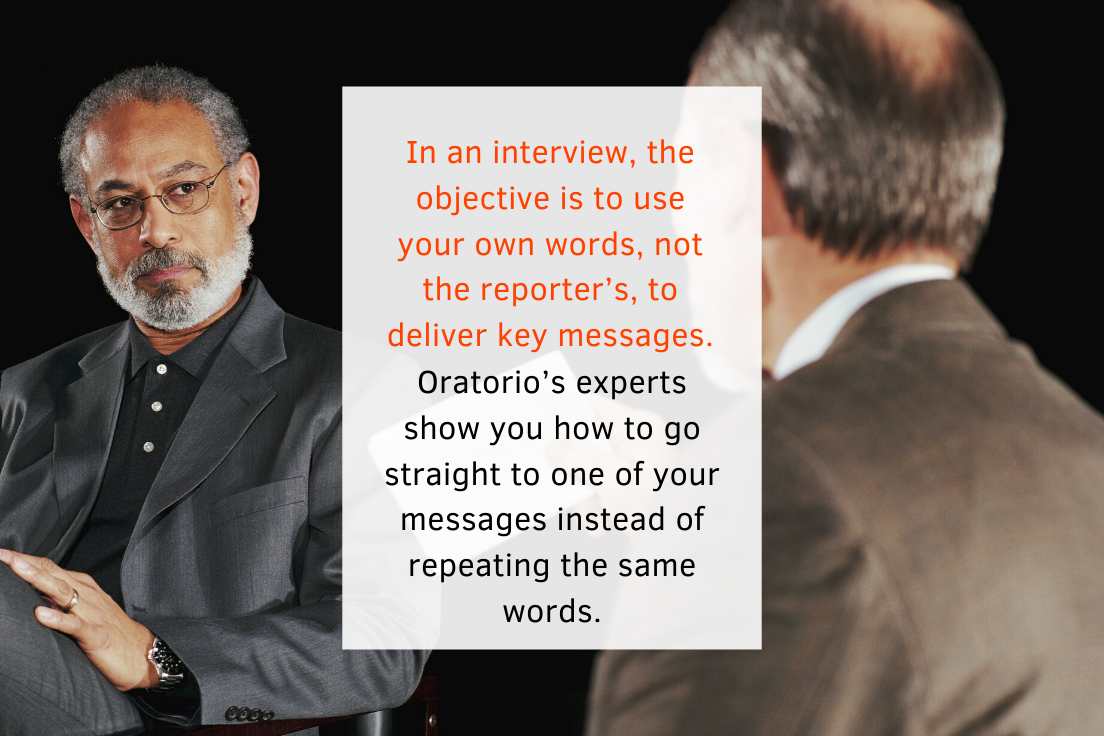
In an interview, the objective is to use your own words, not the reporter’s, to deliver key messages. Instead of repeating the same words, go straight to one of your messages. In this example, you could say, “New technology has made self-driving cars safer than traditional cars by eliminating human error.” Even though you can’t control what the reporter says, you can control how you respond to their questions.
What’s With Your Face?
When on-camera, some people nod their heads as they’re listening to the question because they’re engaging in “active listening.” Most of us have been taught that it’s polite to do this.
Don’t.
If you nod your head while listening, it may appear to the audience that you agree with what the reporter is saying, even if you don’t. Instead, maintain a steady, unmoving “listening face” while the interviewer is speaking. When it’s your turn to speak, be animated and passionate. Smile, unless you’re discussing something truly tragic or unpleasant. Smiling doesn’t detract from your credibility; on the contrary, it makes you look confident, engaged, and committed.
Answer the Question, Claire.
In everyday conversation, it’s usually considered rude to ignore a question and change the topic. If people ask a question, they generally expect you to answer it.
Reporters will ask questions you don’t like; it’s going to happen. The key is to remember that your answer matters far more than the question. If you don’t like a question, find a way to move on to one of your pre-established messages.
If you don’t like the question, you might start out with “a question I am frequently asked is” and share a question that you want to answer, and then answer it.
Skillfully navigating interviews is necessary for any spokesperson, and takes practice and discipline to ditch long established habits and replace them with well thought-out answers and appropriate body language. Every media training session we conduct at Oratorio prepares you to handle interviews confidently.